Its hippy beach shacks may have given way to five-star hotels, but Bali still has pockets of untapped beauty as serene and laid-back as they ever were. Long-time resident Jamie James seeks them out.
Today, Ubud is the most famous country village in the tropics, after last year's Eat Pray Love, starring Julia Roberts, was filmed there. Bali's reputation as a tropical island paradise has its roots in an expatriate artists' colony in the hills near Ubud which, 80 years ago, attracted Noël Coward and Charlie Chaplin, among others.
In the 1960s, hippies flocked to the coconut groves of Kuta beach for the amazing surf and endless summer. Since then, Kuta has expanded at an exponential pace, north into gaudy, glittery Seminyak and beyond, where thickets of luxury resorts and private villas have risen in ancient rice fields, as if by a wizard's spell.
Pictured: Dream Beach on the island of Nusa Lembongan
The Marvels of Bali
Arriving in Bali back in 1999 was like stepping into a time capsule, a world untouched by modernity. The cross-island road in the south was a rugged gravel path vulnerable to heavy rains, rendering it impassable. Internet access, a luxury back then, was a frustratingly slow affair. And only a handful of restaurants dared to venture beyond the typical tourist fare.
Despite the nascent development, Bali's charm as a laid-back paradise prevailed. While big resorts had emerged, luring adventurous millionaires, the once serene coconut groves of Kuta had transformed into a haven for budget-friendly accommodations and cozy homestays. Bali's enchanting allure, seemingly trapped in a bygone era, remained intact.
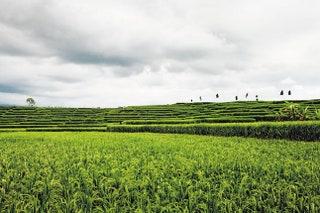
Pictured: The breathtaking rice terraces adorning the steep hillsides of Bali's mesmerizing southern coast.
For centuries, these terraces have been carefully sculpted, securing Bali's reputation as the "Island of the Gods." These emerald-green cascades serve not only as a visual feast but also as the backbone of the island's agricultural heritage. Nestled amidst the tranquility of Bali's awe-inspiring landscapes, visitors can appreciate the unwavering beauty that harmonizes with the island's rich cultural tapestry.
As Bali continues to evolve, welcoming curious travelers from around the world, its allure as a tropical paradise forever lingers.

The best of Bali
But in just 12 years the island has been transformed. Now there are fine restaurants in Ubud and Seminyak, and that cross-island track is a splendid four-lane motorway. But all this progress has come at a cost. Ubud may possess an indestructible charm, with its cultural treasures intact, but tourism is far and away the main business. Seminyak offers gorgeous luxury accommodation with every mod con, and a nightlife ranging from chic to raucous, but it's quite possible to spend two weeks in Bali and leave without being exposed to its fascinating traditions of village life.
Pictured: Executive chef Guy Stanaway at Amankila

West Bali
To see Bali as it was, not just 12 years but 12 centuries ago, I drove out to West Bali National Park, which occupies most of the island's western bulge, across a strait from Java's eastern tip. Bali's only national park, it comprises nearly 20,000 hectares of forest, with an additional 50,000 hectares protected from development. The original forest here isn't tropical rainforest as in the national parks of Java, but coastal savannah, with deciduous trees and thick underbrush. With not a coconut palm or a banana tree in sight, it doesn't look like the Bali of brochures. You might think you were in rural Alabama or Sweden were it not for the monkeys, iguanas and pythons, and the gentle herds of russet-coloured mouse deer and muntjak which run throughout the park.
Pictured: snorkelling at Menjangan Resort in West Bali National Park

Discover Tranquility at Menjangan Resort
Experience a retreat like no other at Menjangan Resort, nestled within the breathtaking wilderness of the national park. Embracing sustainable practices, this eco-conscious resort seamlessly blends with its natural surroundings, offering guests a serene and unspoiled paradise.
Step into your spacious lodge, adorned with rustic yet elegant decor, created from locally sourced woods, bamboo mats, and traditional Indonesian textiles. As you relax on your private veranda, the gentle breeze whispers through ancient trees, enhancing your sense of peace and tranquility.
Menjangan Resort is more than just a place to stay; it's a sanctuary for the rare and endangered Bali starling. This majestic bird, with its stark white plumage, ebony-tipped wings, and striking blue eye patches, finds refuge in the resort's sprawling aviary. The park's dedicated conservation efforts have resulted in a significant increase in the Bali starling population, from a mere six birds in 2001 to over 60 today.
Surrounded by the unspoiled beauty of the national park, Menjangan Resort is a haven not only for humans but also for avian enthusiasts. With over 160 avian species calling this park home, birdwatchers from around the world flock here to glimpse rare and captivating feathered creatures in their natural habitat.
Indulge in the tranquility of the Menjangan Resort, where sustainability, comfort, and conservation intertwine to create a truly unforgettable experience.
The mesmerizing resort, aptly named after Pulau Menjangan (Deer Island), embellishes the north-east coast of Bali, boasting unparalleled snorkeling experiences. Here, a vibrant underwater world of coral gardens awaits, resembling magnificent submerged palaces teeming with an eclectic mix of brilliantly colored fish.
Pictured: Delight in the majestic Rusa deer gracefully roaming at Menjangan Resort
10 kilometers off the mainland, this uninhabited island enthralls visitors not only with its captivating marine life but also with the annual spectacle of deer migration. Each year, these gentle creatures embark on a stunning, synchronized swim across the channel to reach their temporary haven.

Lovina
After a scenic hour-long drive along Bali's picturesque north coastal road, I arrived at the charming town of Lovina. Once a favorite destination among backpackers, Lovina still retains its simple allure. However, unlike the bustling surf and sandy shores of Kuta and Seminyak, Lovina offers a more tranquil experience with its pebbly beach and calm sea.
What makes Lovina truly special is its laid-back atmosphere and affordable prices. In 1995, Nils Normann, a visionary Danish entrepreneur, gazed at the lush forested hills overlooking the beach and envisioned a retreat that would blend European elegance with tropical paradise. This vision culminated in the creation of the Damai, an exquisite inn boasting eight bungalows and later expanded to include six luxurious pool villas.
Pictured: The Damai
For those seeking respite from the crowds, Lovina offers a refreshing escape. Its serene beach and unhurried ambiance provide the perfect backdrop for relaxation. Whether you're strolling along the pebbly shoreline or indulging in the culinary delights at the Damai's fine dining restaurant, Lovina is a hidden gem waiting to be discovered.

The Damai
The night I arrived, Normann was entertaining Henrik, Prince Consort of Denmark, husband of Queen Margrethe II. Tables were set up around the pool and a company of young temple dancers performed traditional dances accompanied by a flute and percussion orchestra. The menu was snail satay, grilled en brochette Malay style, and cappuccino-foam snail soup followed by sautéed scampi. The hotel breeds its own snails, as well as quail, ducks, rabbits, frogs, even pigs and river lobsters; vegetables and herbs are grown organically amid the exotic flowering plants in the hotel gardens.
Pictured: black rice chocolate pudding at the Damai

Singaraja
Lovina is just outside Singaraja, Bali's second city, a pleasant place with wide, tree-shaded streets and some interesting cultural attractions. The Gedong Kirtya is Bali's main repository of historical manuscripts inscribed on the leaves of Lontar palms. It's a place for scholars, but the staff were happy to show me some Lontar manuscripts of love charms and amulets to protect the wearer from evil spells, illustrated with delicate drawings of demons and gods. Nearby on Jalan Gajah Mada road, the Chinese cemetery wall is lined with bas reliefs depicting the celestial delights of the righteous and (always more interesting) the torments of the damned. It's not a great work of art, and it's not listed in the guidebooks, but it is a quintessential Bali experience to stroll past a bucolic graveyard and see a sculpture of Hindu demons hacking off the limbs of some hapless sinner.
Pictured: Temple in the city of Singaraja

Amankila
A week later I headed in the opposite direction, to East Bali and Amankila, one of Indonesia's finest resorts, balanced on a steep hillside overlooking the Lombok Strait, the 250-metre-deep sea chasm where naturalist Alfred Russel Wallace drew his famous line. Other swanky hotels in Indonesia are better known - from Amandari, the first world-class resort on Bali and original Indonesian Amanresort, to splendorous pleasure palaces such as the Bulgari and Alila Villas Uluwatu, which now line the island's southern coast - but this refuge of enlightened luxury remains one of the best portals into the heart of Balinese culture. The resort is well-known among the very well-known who value their privacy; past guests included Diana, Princess of Wales and Elizabeth Taylor.
Pictured: the three-tiered pool at Amankila

Candidasa
The nearby village of Candidasa, like Lovina, has long been a centre for budget travellers, its main drag lined with cheap hotels and restaurants, yet tourism has had a relatively low impact. Wander just a mile or two up any side road and village life goes on essentially unchanged. I spent a sunny morning exploring Tenganan, a perfectly preserved Bali Aga village a few kilometres from the resort. The Bali Aga people are the oldest inhabitants of the island, who follow traditions that predate the Hindu-Javanese conquest and immigration of the 14th century. Tenganan is a tiny socialist republic; all property belongs to the community as a whole.
Pictured: lily pond in Cadidasa, East Bali

Tenganan: A Glimpse into Bali's Enchanting Past
Step back in time and immerse yourself in the captivating village of Tenganan, where tradition and heritage thrive amidst a modern world. I had the privilege of being welcomed into the warm hospitality of Wayan Kondri, a friendly local who generously shared his family's treasured collection of ikat, renowned ceremonial sarongs adorned with vibrant red tree bark, indigo, and yellow macadamia nut dyes. Among the exquisite pieces was one featuring a breathtaking design inspired by wayang kulit, the traditional shadow-puppet theatre of Indonesia.
Although Tenganan has long embraced tourism, its authentic charm remains intact, transporting visitors to an era reminiscent of a bygone century. As you wander through its streets, you'll be transported to a time untouched by the modern world, except for the subtle presence of electric lights, mobile phones, and the occasional flickering glow of a television. Amidst the timeless ambience, Tenganan's idyllic allure truly shines.
Pictured: Wayan Kondri proudly showcasing an ikat weaver in the heart of Tenganan.

East Bali
East Bali was once one of the island's nine independent kingdoms, Karangasem, which extended its rule across the strait onto neighbouring Lombok. In the early 20th century the last rajah of Karangasem built three lavish water palaces surrounded by formal gardens with spring-fed pools, moats and fountains. The grandest of them, Tirta Gangga, survived in good condition until it was damaged by a major eruption of the nearby volcano, Gunung Agung, in 1963. The rajah's descendants have restored this curious work of chinoiserie-in-reverse, a romantic idealisation of a French Renaissance garden in the tropics, and opened it to the public. The largest pool is available for swimming; the five changing rooms were once the changing rooms for the rajah's five wives.
Pictured: a villager walking along the road in East Bali

Exploring Nusa Lembongan
While many resorts in southern Bali offer stunning views of the vast Indian Ocean, the Amankila provides a uniquely captivating sight. From its terrace, guests can observe a lively maritime scene, with fishing boats, pleasure crafts, and large commercial ships bustling about the port of Padangbai, located a few miles to the west. When planning your Bali itinerary, I always recommend adding a boat trip to your adventure. One of my personal favorites is a visit to Nusa Lembongan, a charming island situated off Sanur Beach. It only takes half an hour by speedboat, although opting for a slower boat will enhance your experience even more.
Pictured: The Waka Nusa resort on Nusa Lembongan
Embarking on an excursion to Nusa Lembongan allows you to delve into the unspoiled beauty of this small island. Its pristine beaches, crystal-clear waters, and vibrant coral reefs offer an incredible opportunity for snorkeling and diving enthusiasts. Explore the picturesque local villages, where you can witness the island's rich culture and interact with friendly locals. Indulge in fresh seafood delicacies at beachside restaurants, savoring the flavors of the region.
As you wander through charming coastal paths, you'll discover hidden coves, striking limestone cliffs, and mesmerizing natural landscapes. Watch the sun dip below the horizon during a tranquil evening on the beach, as the island's serene atmosphere envelops you in a sense of peace and tranquility.

Waka Nusa Resort: A Tranquil Blend of Luxury and Budget Accommodation
Indulge in the ultimate beach getaway at Waka Nusa Resort, a unique haven tucked away in Sanghiang Bay. This delightful resort is a harmonious fusion of luxurious amenities and affordable beachside lodging, making it an ideal choice for travelers seeking both comfort and value.
Set in a stunning seaside garden, the resort features charming round bungalows with thatch-roofed ceilings, offering breathtaking views of the bay. While the beach may be teeming with snorkelers and swimmers during the day, the atmosphere remains serene and uncrowded, ensuring a tranquil retreat for all guests.
For those craving seclusion, a short stroll or a convenient motorcycle ride (which can be easily rented in Bali) will lead you to pristine white-sand beaches with invigorating waves. These hidden gems provide a peaceful oasis away from the bustling crowds.
Experience the pleasure of sailing on the majestic 16-meter catamaran, known as the Waka, which effortlessly carries you across the strait to Lembongan. After a two-hour journey, you will arrive at the crystal-clear waters of Sanghiang Bay, where Waka Nusa Resort awaits.
Elevate your beach getaway as you immerse yourself in the enchanting surroundings of Waka Nusa Resort. Whether you seek adventure or relaxation, this charming resort offers the perfect blend of tranquility and excitement.
During my afternoon siesta, I attempted to catch some much-needed rest, only to be disrupted by the lively commotion of a nearby cockfight at the quaint temple beside the Waka Nusa resort. The uproar of squawks and shrieks rendered sleep impossible, compelling me to venture over and observe the spectacle. While many romanticize the tranquility of Bali, I often jest about escorting them to a cockfight in order to provide a different perspective.
Immersing myself in the event, I found myself captivated by the anticipation and enthusiasm displayed on the faces of the men, attired in their finest ceremonial batiks. As the bloody scene unfolded, I tactfully averted my gaze, focusing instead on the determination in their expressions.
Pictured: The entrance to the Waka Nusa resort nestled on the enchanting island of Nusa Lembongan, framed by the majestic presence of Bali's Gunung Agung volcano in the distance.

The Unforgettable Charm of Bali
As the dusk settled over the enchanting land of Bali, it became abundantly clear why this Indonesian paradise continues to captivate visitors from across the globe. While the bustling crowds retreated to the mainland, I found solace in the tranquil corners of this island, relishing the true serenity that Bali has to offer. The stillness enveloped me, punctuated only by the melodic chortles of ring-necked doves and the gentle symphony of crashing waves and singing crickets.
With each passing moment, the mesmerizing sunset painted the sky with hues of gold, casting an ethereal glow over the lush trees and coral walls. It was in this moment, under the glossy tangerine moon rising above the Bay of the Almighty, that Bali reaffirmed its hold on my heart. Its irresistible allure simply refuses to let go.
Pictured: An unforgettable sight at Amankila, where a Balinese girl gracefully presents a ceremonial offering made from leaves, showcasing the rich cultural traditions that are ingrained in every corner of Bali.

West Bali Accommodation Options
ACCOMMODATIONS IN WEST BALI
The Menjangan Resort (00 62 362 94700;www.themenjangan.com) is nestled in the heart of West Bali National Park, offering expansive rooms in their Monsoon Forest Lodge for US$225. Under the helm of a new management team, this resort is due for a sizable revamp in the near future. An alternative accommodation within the national park is the Waka Shorea (00 62 361 484085; www.wakashorea.com). A companion establishment to Waka Nusa on Nusa Lembongan, Waka Shorea can only be reached via boat ride from Labuhan Lalang port. It offers pleasant ocean-view bungalows from US$185, and for a more luxe experience, private beach villas are available from US$285 (keep in mind most Balinese hotels offer significant discounts for walk-in customers and during off-peak seasons).
The village of Pemuteran, an established diving centre just outside the national park, has some fine hotels. The queen among them is Puri Ganesha (00 62 362 94766; www.puriganesha.com), a collection of villas in traditional Balinese style set on large tracts of land, each with a private 12-metre pool; from US$625. Also in Pemuteran, Matahari Beach Resort & Spa (00 62 362 92312; www.matahari-beach-resort.com; doubles from US$234) is a fancy beach hotel, ornately decorated in traditional style, and set in lush gardens on the edge of a black-sand beach. Rooms at the venerable Taman Sari (00 62 362 93264; www.balitamansari.com), long a sentimental favourite of expats, are done up in uncommon good taste, with fine original artworks even in standard rooms at US$60; seaview cottages at US$80 offer exceptional value.
In Lovina, the Damai (00 62 362 41008; www.damai.com) is in a class of its own, with bungalows looking out onto the garden for US$234, and huge (200 square metre), beautifully detailed pool villas for US$421. Lovina beach is lined with undistinguished budget hotels (called 'losmen' in Indonesia); the best of the lot may be the Rambutan (00 62 362 41388; www.rambutan.org), which has clean, attractive doubles from US$55, set in a hectare of tropical gardens. Rumah Cantik (00 62 362 42159; www.lovinacantik.com), down a country lane off the main road, offers a chance to experience life in a Balinese village. Like the Damai, it's the brainchild of a Dane, Jette Stampe, and has just four rooms facing a pool for US$85.
Pictured: master bedroom of Umah Rata villa at the Damai

Accommodation Options in Eastern Bali
EXPLORING EAST BALI'S BEST ACCOMMODATIONS
The luxurious villas of Amankila (accessible via 00 62 363 41333 or www.amanresorts.com) offer top tier accommodations starting from US$800. For those seeking architectural beauty, Alila Manggis (contact at 00 62 363 41011 or www.alilahotels.com; rooms from US$210) is a sight to behold. This property showcases two colonial-inspired mansion structures beside a vast oceanside garden and pool. Additionally, Alila's very own Seasalt restaurant offers exemplary dining in Bali and even hosts sought-after cooking workshops.
In the heart of Candidasa lies a gem known as the The Watergarden Hotel & Spa, a quaint British establishment (00 62 363 41540; www.watergardenhotel.com). It boasts 14 exclusive cottages, architecturally fashioned with marble flooring and thatched roofs, resting peacefully beside a wind-twisted lotus pond. For an oceanic experience at a reasonable budget, the Candi Beach Cottages (00 62 363 41234; www.candibeachbali.com; starting at US$160 for double rooms) offers newly-renovated classic interiors set amidst a coconut plantation. Guests also receive complementary access to tennis courts or canoe equipment for a one-hour experience.
Nusa Lembongan, an island paradise, is home to the Waka Nusa Resort. This charming resort, conveniently contactable at (00 62 366 24477; is celebrated for its picturesque bungalows starting at a reasonable US$100. More about this is available at their official website: www.wakanusaresort-bali.com. Nearby lies the Nusa Lembongan Resort available at (00 62 361 725864;. While it isn't directly on the beach, it boasts luxuriously finished cottages equipped with in-ground marble bathtubs, with rates commencing at US$295. Further details are at www.nusalembonganresort.com.
Despite its modest name, Dream Beach Huts (00 62 361 743 2344;, is among the trendiest spots in Lembongan. With its fantastic location overlooking a white sandy beach and popular among young Europeans, it boasts charming huts starting at a mere US$75. Visit www.dreambeachlembongan.com for more information. The Sunset Villas provide a simple, yet enjoyable homestay in a less crowded section of the island - the aesthetic, fan-cooled rooms start from about £25. To learn more, head to www.balisunsetvillas.com.
If you're looking for a satisfying day trip, then the Waka catamaran offers a thrilling day's sail. It presents a delightful lunch package at the resort including a guided island tour or a snorkelling adventure for US$108 per individual, all of which are included in the offer. You can make a reservation by contacting (00 62 361 723629; and visit their site at www.wakaexperience.com.
Pictured: The elegant Indrakila Suite at Amankila, a marvel of Balinese architecture.

Travelling to Bali
HOW TO REACH BALI
One can fly to Denpasar in Bali from London's Heathrow courtesy of British Airways (08444 930787; www.ba.com) through a connecting flight from Singapore. Alternatively, there's an option via Hong Kong offered by Cathay Pacific (020 8834 8888; www.cathaypacific.com). Another option is via Kuala Lumpur with Malaysia Airlines (0871 423 9090; www.malaysiaairlines.com). The total journey time through Singapore is approximately 17 hours.
IDEAL TIME OF VISIT
While Bali experiences a warm, tropical climate all year round, the island is especially wet from October to March. If you prefer a dryer and sunnier vacation, consider booking your trip from April to September as shower frequency is lesser during these months. Bali's equator-straddling location ensures consistent heat and sunshine.